2026 World Cup: How far has the US game come since 1994's 'greatest show on earth'?

A MOMENT: US fans celebrate the opening of the 1994 World Cup at Soldier Field in Chicago. File picture: Shaun Botterill/Allsport
WORLD CUP 2026 kicks off a year from today, and with Gianni Infantino promising the biggest, best tournament yet, what can we expect?
Canada, Mexico and the United States will host what will without doubt be the biggest World Cup ever, with 48 countries playing 104 matches over a month-long festival of football.
Whether it will be the best ever is another question. Comparisons will be inevitably drawn with USA '94, when North America hosted the greatest show on Earth, with mixed fortunes.
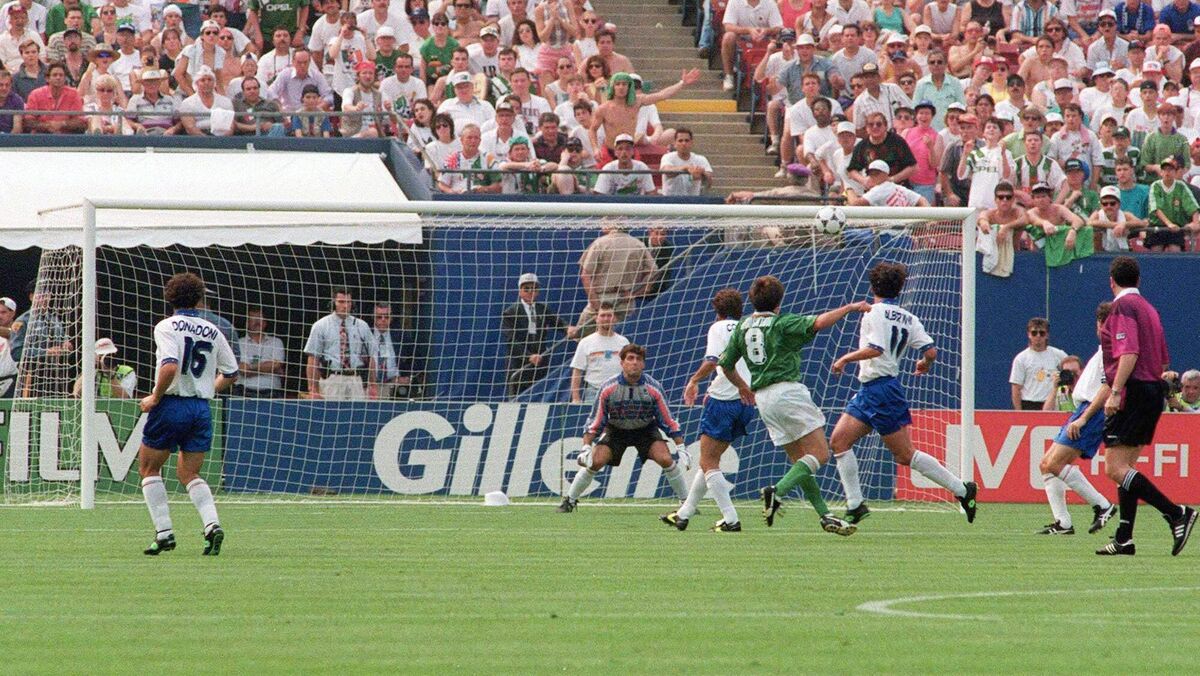
No Irish fan can forget the moment Ray Houghton volleyed past Gianluca Pagliuca to give Jack Charlton's men victory over Italy in the Giants Stadium, sparking celebrations that reverberated around the world from New York to the old country.
A fair number of England fans applauded that win, given the fact that Graham Taylor's side had failed to qualify.
There was controversy, too, with Colombia's captain Andres Escobar shot dead on his return to Medellin after scoring an own goal in his country's defeat by the US.
Diego Maradona was famously kicked out of the tournament after failing a drugs test, effectively ending Argentina's hopes as Brazil went on to lift their fourth trophy, beating Italy on penalties at the end of a forgettable final at Pasadena's Rosebowl stadium.
It will be a very different experience next year. There is little likelihood of Lionel Messi suffering the same fate as Maradona, one hopes no player will be shot for scoring an own goal, and England should be there, although Thomas Tuchel's men look a long way from a winning team.
Already ten teams including Brazil have joined the three host nations in securing their spots, and Heimir Hallgrimsson’s men start their campaign in September, against Hungary, Armenia and Portugal.
But the biggest difference from 31 years ago is that football fever has finally gripped the USA, which will host three-quarters of the tournament.
FIFA was castigated for awarding the 1994 finals to the Americans because it was argued they neither understood nor cared about the world's number one sport.
Although that World Cup can still claim the biggest attendances so far, with an average of almost 69,000 fans per game, it was not widely shown on the major television networks, went largely unnoticed by a largely indifferent population, and was played out in stadiums designed for other sports, with little football infrastructure and no organised league to speak of.
Fast forward 31 years and it could not be more different. The biggest legacy of USA '94 can now be seen in what is happening across the Atlantic, where the game is now flying, second in popularity only to the NFL by spectators under-35.
Major League Soccer has grown exponentially since it was introduced in 1996 as a condition of hosting USA '94, and is now a serious player in world football.
Only the Premier League drew bigger crowds than the 12.15 million who attended MLS games last year, there are 26 purpose-built stadiums, 13 of which will be used for the World Cup 2025, and the number of teams has trebled to 30, up from the 10 founders.
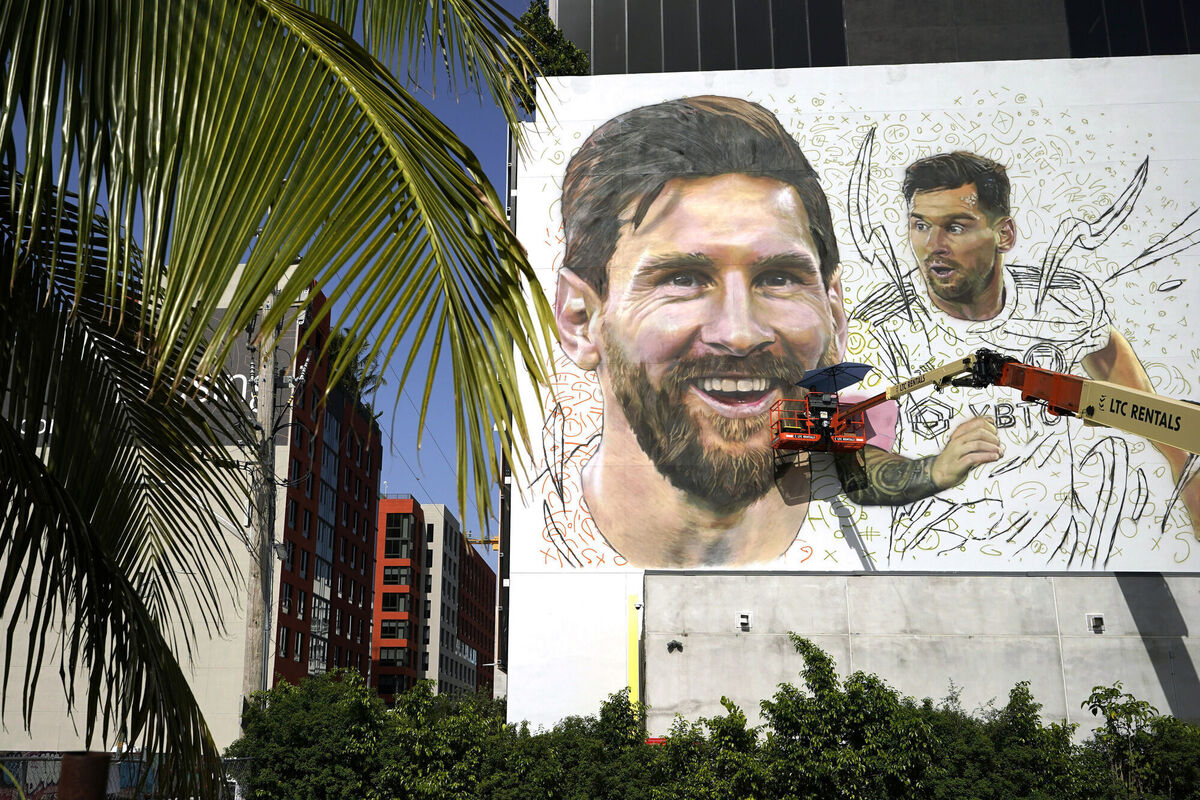
Most importantly the great American public are hooked on football, knowledgeable and enthusiastic, and will embrace the World Cup like never before. It would be easy to put it down to the Messi effect, since the Argentinian's move to Inter Miami two years ago.
And while there is no doubting the growth in interest, with attendance records broken where he plays, his 'boss' has been the truly transformative figure in all this – David Beckham.
The Inter Miami co-owner, recently knighted by King Charles for his services to English football, has been a game-changer in America, according to Dan Courtemanche, MLS Director of Communications.
“David Beckham changed the fate of American soccer, not once, but twice,” he says.
“When he came in 2007 it really set the stage, and he's been a tremendous catalyst for growth. But then you come to recent years, as the co-owner of Inter Miami, and they signed Lionel Messi, the greatest player to ever play the game. Messi making MLS his league of choice has been a game changer.”
It happened before, of course, when Pele went to New York Cosmos in the 1970s, sparking an influx of world stars, mostly past their prime.
The North American Soccer League fizzed and then faded like a firework, however, and the MLS learned from that experience, as well as looking to Europe to see what a serious league looked like.
Courtemanche has been with the MLS since those formative years and says: “When the United States bid for the World Cup in the late 80s, there was no first division professional outdoor league in this country, and FIFA made that part of the criteria.
“When we put together the business plan for Major League Soccer, we looked at leagues throughout the world, and at what happened with the NASL.
“We formed with 10 clubs in 1996 and the fee to purchase a team was $5m. Fast forward to 2025 and we now have 30 clubs in the US and Canada, with at least four of them valued at more than $1bn, so we have seen exponential growth. When the league started, we had zero stadiums built for our clubs. Now, we have 26 stadiums that are purpose built for MLS teams, some of the best in the world.
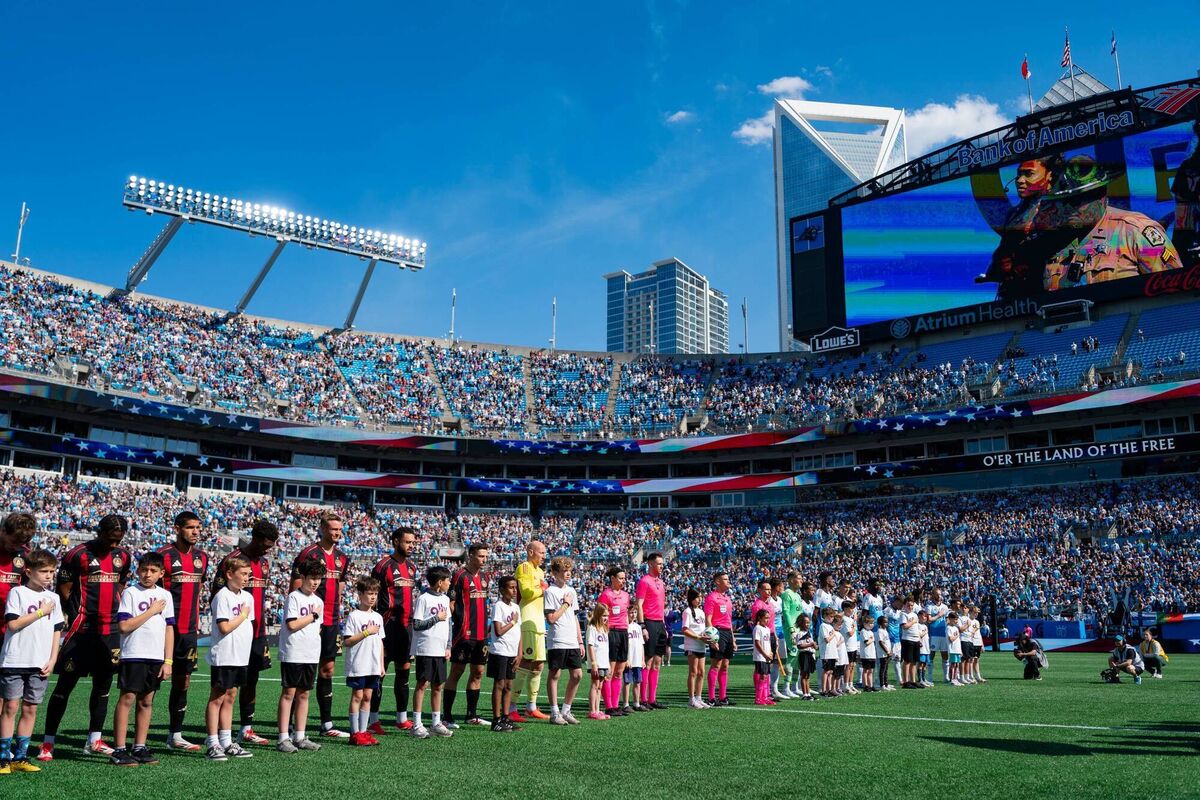
“We knew we needed to have youth academies and world class training facilities, which we have. Since the World Cup came in 1996 we like to say that Major League Soccer has led the way in building a soccer nation in the United States.
“North America has seen significant growth in the sport throughout the last three decades, and when we were awarded the 2026 World Cup, we all knew that we had a North Star that we could look towards.”
Don Garber, MLS Commissioner, has spoken of the World Cup acting as “rocket fuel” for the growth of football in the US, and Courtemanche agrees: “We certainly believe that the World Cup will serve as rocket fuel to grow the sport overall in the United States and Canada, and when you look at where we're at right now, North America, at least over the next few years, will be the epicenter for global football.
"We have the Club World Cup and Concacaf Gold Cup this summer. We have a great intra league tournament called Leagues Cup, where MLS clubs play Liga MX clubs from the Mexican league.
"And when you go into the World Cup in 2026, as FIFA likes to say, it will be the largest sporting event in the history of mankind. You'll have sellouts. You'll see attendance records. They will definitely be broken.”
And what can fans expect?
“For those coming to the World Cup, they're going to see world class hospitality, they will see stadiums as good, if not better than any other part of the world. The transportation system in major cities like New York City or Chicago is is on par with some of the top cities around the world.”
“With Major League Soccer now in its 30th season, we've built a footballing culture in the US where you see supporters in a capo stand, and you see tifos, it's exciting, it's exhilarating.
“We're ambitious. We're going to continue our evolution. And we certainly want to welcome the world to the United States and Canada and Mexico for for the World Cup next summer, and we think they'll have a terrific experience.”