Mick Clifford: Carlow’s shooting tragedy forces a reckoning with how justice is administered

Gardaí had initially objected to bail for Evan Fitzgerald, aged 22, after he was caught last year with guns and ammunition which he admitted to having bought on the so-called 'dark web'. Picture: Garda Press Office

The death of Evan Fitzgerald on 1 June was a shocking development in this country. The 22-year-old discharged a shotgun in a supermarket in the Fair Green Shopping Centre in Carlow and later died of a self-inflicted wound.
In the first instance it was a terrible tragedy for him and his family. The circumstances, however, ensured that it impacted hugely on the national psyche. Initially, there were suspected echoes of the gun violence that has become a feature of other countries, most particularly the USA, in which a disturbed individual kills others in a crowded setting before turning the gun on himself. Thankfully, this is one of the few western countries that has so far avoided such horror.
There were also fears that it could be associated with the kind of suicide terrorist attacks that have occurred across the world in the last couple of decades. This prompted the gardaí, correctly, to disseminate the detail that the gunman was a white Irish male in order to staunch the flow of disinformation that could be weaponised against minorities.
Pretty quickly it emerged that the deceased man had been on bail on charges of possession of firearms and had got his hands on another weapon which he used in the incident. When he was charged in March, the district court had been told that the firearms had been purchased on the dark web, that Mr Fitzgerald made a full admission, and that he had a “fascination with firearms”.
Two other men are before the courts on the possession and related charges.
Then the blame game began. “Garda sources” put it about that Mr Fitzgerald had been on bail against their objections. The inference was that a judge released him over the gardaí’s well-informed opinion that he could be a danger.
This was against a background in recent months in which questions had arisen over whether the bail laws were being administered properly.
Some politicians weighed in, such as Independent Ireland’s Ken O’Flynn. He issued a release hitting out at a system that “appears to deprioritise innocent people and innocent communities while granting disproportionate consideration to the rights of the accused, even where there is a clear history and pattern of lawbreaking behaviour”.
That was both rash and crass. There was no such history with Mr Fitzgerald. The deputy would have been well advised to find out the details of the case before mining it for cheap political points.
Four days after the shooting, the judge who had overseen Mr Fitzgerald’s initial court appearance said he wanted to “set the record straight” over “a lot of headlines about a man on bail”.
Judge Desmond Zaidan told his court that the headlines had prompted him to listen back to the digital recording of Mr Fitzgerald’s court appearance. Contrary to the headlines and the spin, the gardaí, after an initial objection, had consented to bail when conditions were attached.
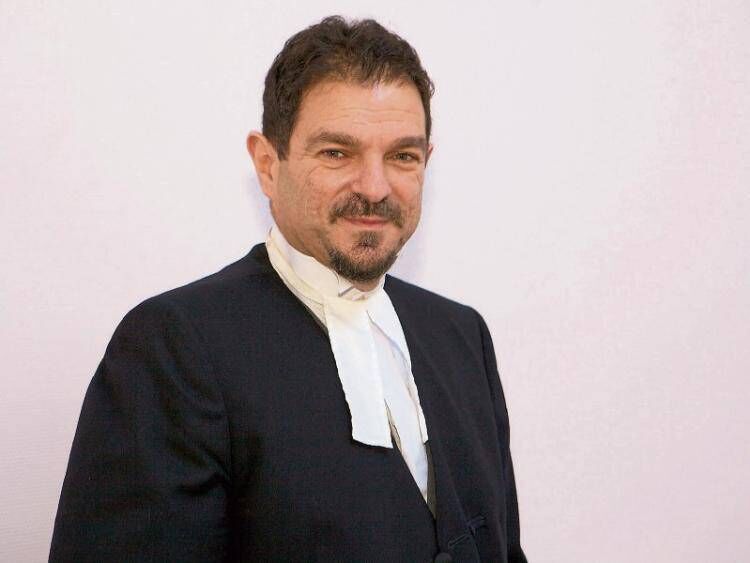
Once the gardaí consented, the judge said, he had no power to overrule.
“It’s up to gardaí. It’s not unique to this case,” he said. That apparent conflict - “garda sources” inferring the judge was to blame, with the judge having to correct the record - was concerning in itself. Then this week, any concern was elevated to alarm by what was revealed before an Oireachtas Justice committee hearing.
Labour’s Alan Kelly told the committee that the guns and ammunition that was the subject of the charges against Mr Fitzgerald had been supplied by the gardaí. He put questions to Commissioner Drew Harris who was before the committee.
It emerged that the gardaí had received a tip-off and set up a sting operation in which they posed as arms dealers. Undercover gardaí met Mr Fitzgerald and then later met him again to hand over the weapons. Soon after, they arrested him. In police terms this is known as “controlled delivery”.
The commissioner confirmed to Kelly the general gist of the narrative. “I would say that controlled delivery is a very sensitive police methodology,” Commissioner Harris said. “We use it for both organised crime and for terrorist offences.”
Evan Fitzgerald was not involved in terrorism or organised crime. Quite obviously, on the basis of their consent to bail, the gardaí did not consider him to pose any sort of a threat to society. According to Kelly, the undercover gardaí met him on one occasion before the controlled delivery.
The commissioner also told Kelly that on the basis of what was involved he referred the matter to the new garda ombudsman body, Fiosru. The ombudsman investigated the matter and returned to the commissioner within three weeks concluding that “there was no further action they wish to take”.
On Thursday, Senator Michael McDowell raised the issue in the Seanad. Like Kelly the previous day, he noted that court proceedings were in train against other individuals so he would take care on what he said.
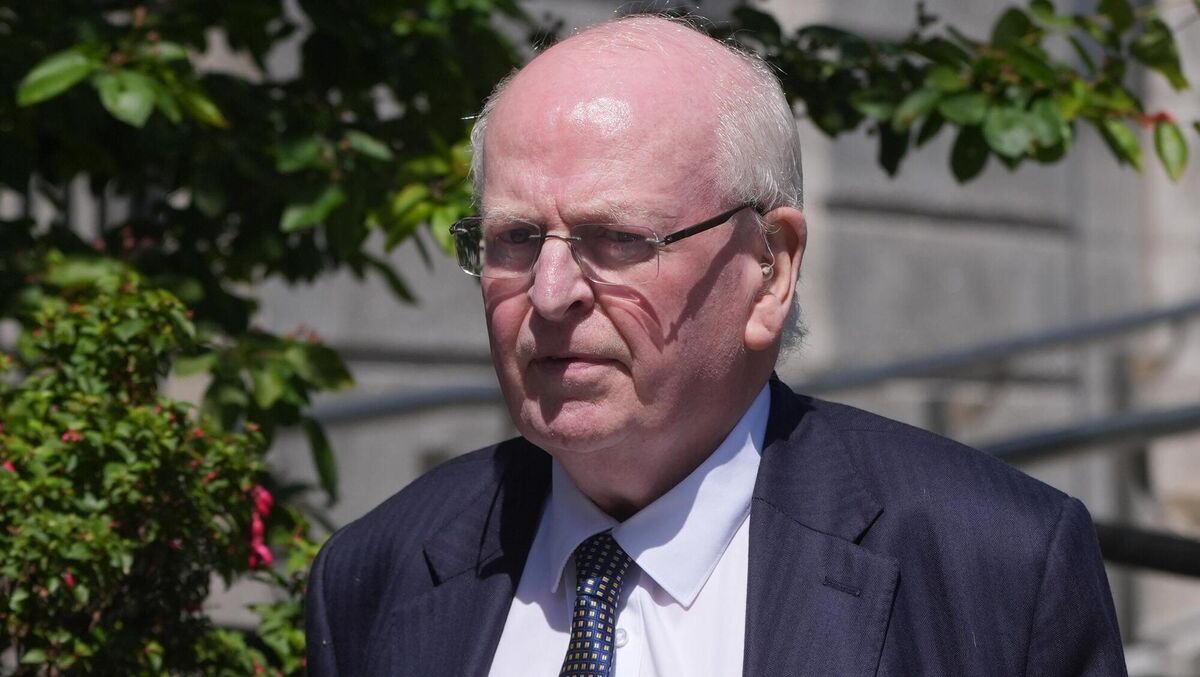
He described Evan Fitzgerald as “a vulnerable young man”. He said it appears that at the initial court hearing where Mr Fitzgerald and others were charged “the court was informed that the gardaí were still investigating who sold the firearms to the defendants”.
The senator went on: “I am deeply concerned that all of these events could have been avoided if diversion, rather than entrapment and prosecution, had been deployed by the guards. I'm also concerned that by informing the court in question that the guards were still investigating by whom the weapons were sold, the court was actively misled on the entrapment and prosecution of three young men for firearms offences involving the gravest of consequences for their lives and careers.
“One of them apparently chose to end his own life rather than continue with the criminal process.”
They involve the use of garda power, the relationship between members of the force and the courts and the operation of the body charged with overseeing the gardaí.
The manner in which these facts entered the public domain is also noteworthy. Kelly and McDowell come from different political traditions. Both have served in governments, but not at the same time. McDowell served as minister for justice and attorney general.
Their respective backgrounds infer that either would be highly unlikely to use parliamentary privilege to air this issue unless they each had genuine concerns and solid evidence. The current justice minister Jim O’Callaghan would be well aware of this.
What is now obvious is that some form of independent inquiry into the whole matter is warranted. We are no longer living in a past where matters such as this can be quietly filed away and everybody simply moves on.