Why are children with special educational needs lining up at court to secure school places?

It's very likely the system has widely underestimated the demand for special educational placements. File photo: Danny Lawson/PA
By court order, his name and address have been anonymised, but an affidavit submitted to the High Court paints a picture of an affectionate little boy, curious about how things work.
As children do, he enjoys watching his favourite programmes on TV and playing with his toys, particularly fire engines. He has a “great sense of humour” and when something catches his attention, he likes to share it with his parents.
This little boy has complex needs; He’s autistic, and sensitive to noise, which can have a negative impact on him particularly in an “unpredictable school environment”.
He can be withdrawn and isolated socially. He struggles to emotionally regulate, and he’s classed as a “flight risk”, requiring adult supervision and ongoing support.
He is one of more than two dozen children currently pursuing High Court action in a bid to secure a school place that appropriately meets their educational needs for this September.
This is despite the best efforts of his mother, who was well aware of the shortage of suitable place and took steps to be prepared. She started applying to schools and linking in with their local special educational needs officer (SENO) as far back as September 2023.
Her hunt for a school place began more than a year after the Ombudsman for Children found the forward planning for special education to be a “clear failure on the part of the State”. The system was “acutely” aware of her son’s needs, and in good time.
And yet, enclosed with the High Court affidavit, an assessment of his needs and other relevant documents are copies of the rejection letters he has received from nine separate schools.
Some are scant on detail or apology; others express regret and place him on yet more waiting lists. One informs the boy’s family it had just two places available for this September.
This boy is one of many children, and more are expected to plead their case to a High Court judge this summer, desperate to secure a school place ahead of the new school term.
On Tuesday, the Department of Education is expected to make its case as families legally challenge the minister for education and youth, Helen McEntee, and the National Council for Special Education on their failure to provide their children with school places.
The shortage has been flagged for many years, and, on paper, there have never been as many autism classes open in mainstream schools. Eleven new special schools have been established in the last five years.
But despite this, a series of national protests and damning reports by children’s rights advocates, the scramble for a very limited number of suitable school places continued again this year.
There are a few issues converging; The system doesn’t have enough places for everyone who needs a place, to put it plainly.
In 2023, the Department of Education and the NCSE projected that a total of 3,466 autism specific special classes would be required by September 2025. This was focused on the identified need at the time, meaning that it was based on the need from the year before.
We have missed this target; The total number of special classes for autistic students across primary and post-primary come September will be close to 3,300, even including the new 399 ‘sanctioned’ classes opening in the new term.
Off the bat, that’s a shortfall of roughly 1,000 students. This also doesn’t consider the complexities of the admissions system or take into account that many students may not require a special class place until they reach a busier school environment at post-primary.
This figure aside, it is also very likely the system has widely underestimated the demand for special educational placements.
Not every autistic student will require a place in a special class, but the prevalence of autism is now thought to be much higher than previously understood or estimated.
A few years ago, the estimated prevalence rate was around 1.5%. By 2023, it had increased to roughly 3.4%. It's now understood to be more accurately somewhere around 5%.
When it comes to special schools, 11 may have opened in recent years, but it was mainly in response to oversubscription or where the demand for places couldn’t be met by simply offering extra places in existing special schools.
Separate to the overall lack of provision is a convergence of connected issues with the system, all seemingly coming to a head this year.
A child’s right to education is protected and enshrined under several key pieces of legislation. It's something Ireland should be proud of, and something we should not take for granted.
Yet, children with special educational needs and their families are somehow expected to accept unfathomable scenarios that simply would not occur for neurotypical children.
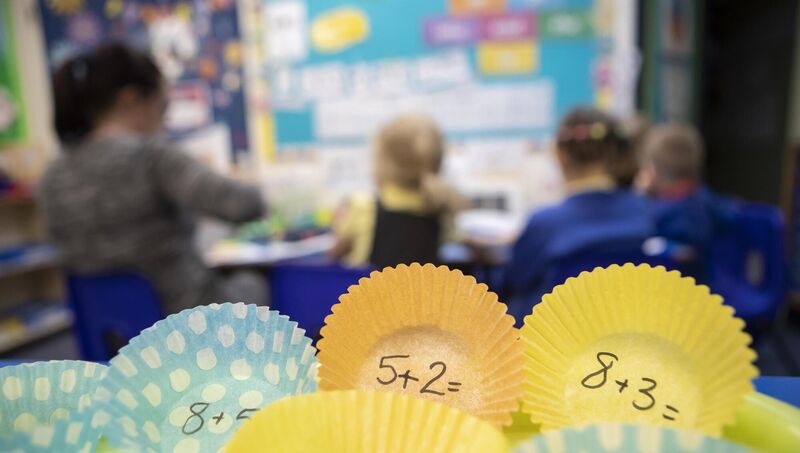
Some parents apply to upwards of 30 schools to receive back a slew of rejection letters, which, if they are lucky, might include a vague promise of a place on yet another waiting list.
Faced with no school place and seemingly impenetrable waiting lists for any form of services, many parents have simply had enough. There is greater awareness of their child’s rights, and less acceptance of situations that fall far short of what they deserve.
Many may have extended their child’s stay in pre-school as they could not secure a primary school place, an option that, through no fault of theirs, blocks the system for another child.
It also in effect just kicked the can down the road, as they now cannot extend their child’s early intervention programme for another year.
Some may have an offer of a school place, in theory, but there is doubt over when that class will be ready to welcome students.
For September 2025, 399 special classes have been ‘sanctioned’ by the NCSE with places for approximately 2,500 students.
But there are concerns that many of these might not be in a position to welcome students through the doors come September due to issues with planning, construction and funding.
A “sanctioned” class is not the same as an “open” class. It means the NCSE has given it the go-ahead to start setting up.
This process starts much later in the school year, well after the enrollment process for mainstream students.
It happened around April this year, which even though it is earlier than in 2024, still means an incredibly short turnaround, especially if building or modular work is required, and particularly if schools run into local planning objections or issues.
Another issue coming to the fore this year is the matter of ‘inappropriate’ school places; children placed incorrectly within the current system in classes and schools that cannot offer the support they need with the resources they have.
Parents may have taken a place in previous years, grateful to have received an offer at all, but now it's becoming more apparent that the school cannot meet their child's needs.
A child may have also completed a long-delayed educational assessment confirming they require a different educational setting.
There is no good that can come from an inappropriate school placement.
At best, it leads to incredibly strained relationships between schools and families, increased stress and behavioural challenges and contributes towards reducing a student’s time spent in school.
At worst it results in serious injury, regression and expulsion.
Last year, the Ombudsman for Children found that despite some improvements in recent years, there was “much still to be done” to improve the system for students with special educational needs.
“The progress made since 2022 comes from what was a completely unacceptable situation for children with SEN and their families, and one that has unfortunately not gone away.”
Yet again, it will be another summer where the High Court hears from families in desperate need of a school place before the new term.
In the affidavit submitted to the court, this little boy’s mother references a press release from the Department of Education announcing 2,700 new school places for September.
While it is encouraging to see a clear commitment from the minister, such commitments have been made before, she notes.