Edward Burke: Donald Trump's Iranian gamble leaves Europe exposed

Uncertainty over whether Israel, or even the United States, may seek to kill Iran’s supreme leader, Grand Ayatollah Ali Khamenei, prompted Iraq’s most influential cleric – Grand Ayatollah Ali Sistani – to warn Trump that such a step would plunge the entire region into “chaos”. File photo: Office of the Iranian Supreme Leader via AP
President Donald Trump’s war against Iran is a spectacular gamble, one that leaves America’s erstwhile allies in Europe exposed and vulnerable. It is the most dangerous and uncertain moment in the Middle East since the invasion of Iraq in 2003.
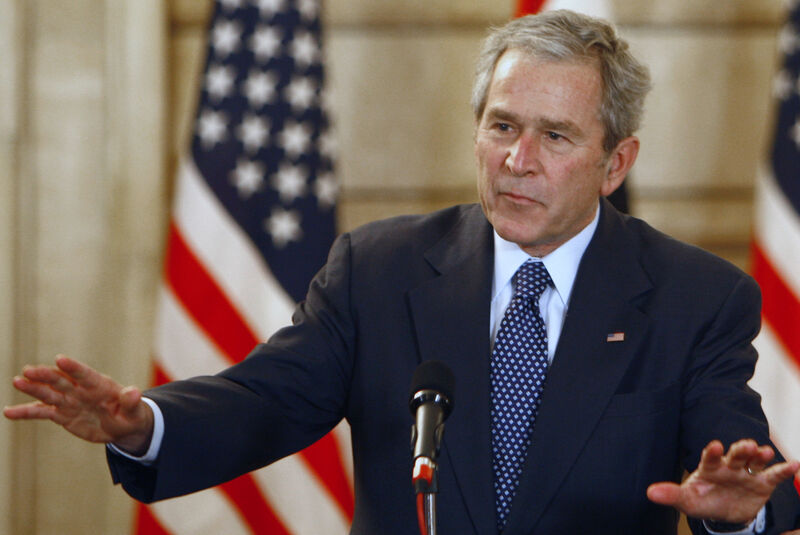
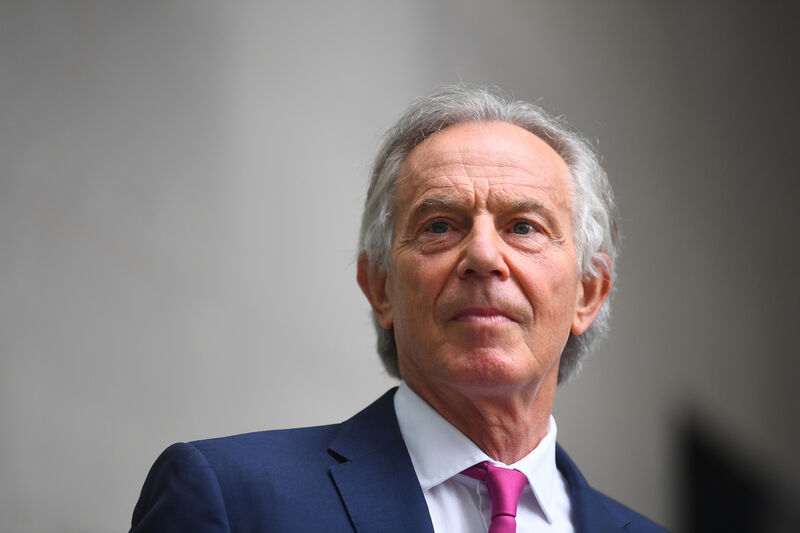
Then, US President George W. Bush and British Prime Minister Tony Blair spent the preceding months trying to drum up support in the UN Security Council for an attack on Saddam Hussein’s regime.
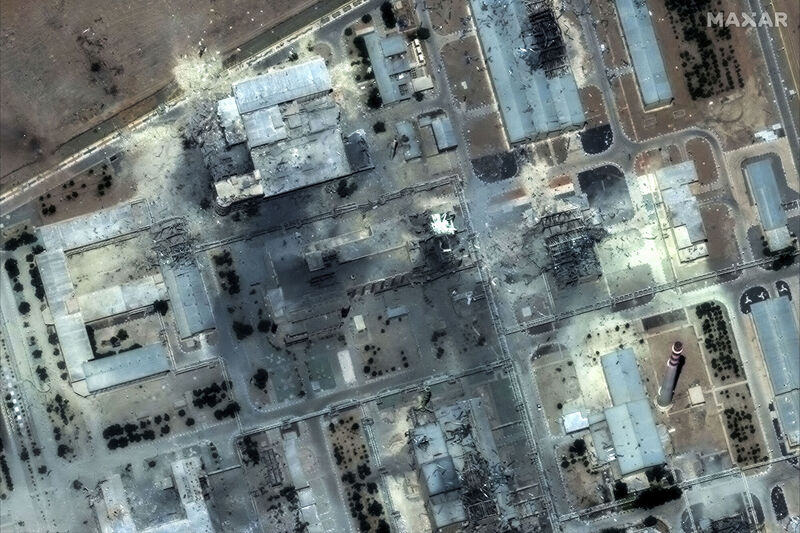
Twenty-two years later, Trump did not even consult the Security Council – or get approval from the US Congress – before he launched a series of military strikes against three sites in Iran – Natanz, Fordow and Isfahan – critical to the country’s nuclear programme.
Like Bush and Blair in 2003, Trump would not have been able to secure a UN Security Council resolution to authorise an armed attack on Iran. But unlike Trump, Bush and Blair initially tried to build as broad a coalition as possible for military action.
The US and the UK secured UN Security Resolution 1441 in November 2002, a robust mandate for inspectors that gave Iraq “a final opportunity to comply with its disarmament obligations” when it came to weapons of mass destruction.
Ireland, a member of the Security Council at the time, voted in favour – Ambassador Richard Ryan warned the council, however, that the “resolution [was] about disarmament, not war”. Ultimately, Bush, Blair and their allies ignored the inspectors and went to war anyway, without a further resolution.
The invasion of Iraq in 2003 was supposed, to quote Blair in a private message to George Bush, to “define international politics for the next generation … to construct a global agenda around which we can unite the world, rather than dividing it into rival centres of power.” The war in Iraq did define the Middle East and much of our politics.
The deaths of thousands of civilians, years of American military casualties, and the rise of Islamic State in an Iraq that collapsed into a morass of sectarian murder, all bred a cynicism towards Washington, both in the US itself and abroad. A generation of veterans of Iraq, not least Vice President JD Vance, embraced American isolationism – America First.
Trump holds international law and multilateral organisations in absolute contempt. He and Vance campaigned on a promise to avoid foreign wars. But, above all, Trump likes a winner.
And right now, Israel’s Prime Minister Bibi Netanyahu has enjoyed a series of staggering intelligence and military tactical successes, in Lebanon against Hezbollah and now against the Iranian regime. Trump wants in.
Like Bush, he wants to be the US leader to re-draw the Middle East in America’s favour. He wants regime change in Iran. Unlike Bush, he wants to do it on the cheap – using the United States and Israel’s air dominance and signals communications intelligence superiority over Iran rather than a mass ground invasion.
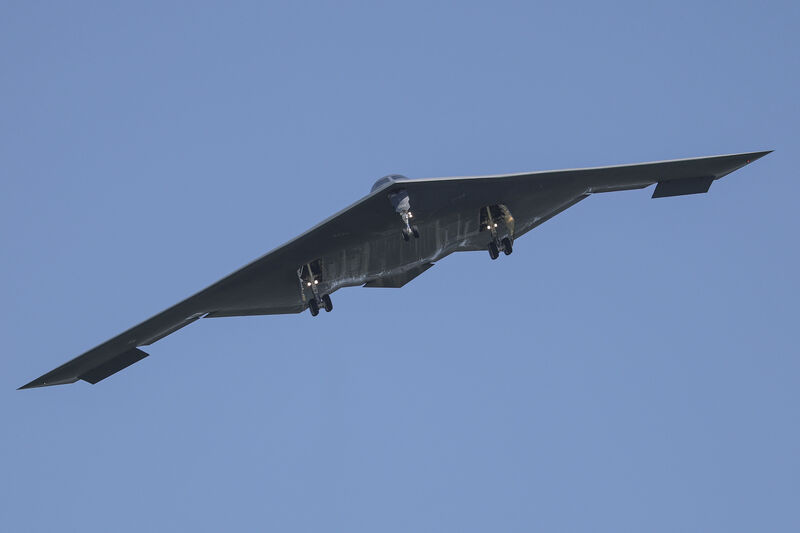
The targeting of Iran’s nuclear sites was undoubtedly a sophisticated operation. US B-2 bombers dropped a total of 14 “bunker buster” bombs – GBU-57 Massive Ordnance Penetrators (MOP) – on two target areas. The MOP is a 20-foot-long, 30,000-pound munition that can penetrate through more 100 feet of concrete.
More than 30 Tomahawk Land Attack missiles, from a nuclear-powered submarine, also hit their targets in Iran during Operation Midnight Hammer. More than 125 US aircraft were involved in the operation, including those that provided intelligence, surveillance and reconnaissance and refuelling capabilities.
Trump’s bravura, assuring the world hours after Midnight Hammer that Iran’s key nuclear enrichment “have been completely and totally obliterated”, may turn out to be premature. Sima Shine, a former Iran expert for Mossad, Israel’s foreign intelligence service, has said that she believes that the Iranian government moved much of their enriched uranium before the US strikes.
The danger now is that regime hardliners will insist that remaining stockpiles of highly enriched uranium are weaponised as quickly as possible. Doing so will take many months, however. And Israeli intelligence has proved to be exceptionally adroit, able to successfully target and eliminate many of Iran’s most senior military commanders and leading nuclear scientists.
We are in an exceptionally perilous situation where the Iranian government may go for broke to build a nuclear bomb in the middle of a conventional war – with all the risks that entails in terms of the proper storage and handling of such unstable material.
Trump cannot escape the foreign policy decisions that have preceded his administration. The decisions of presidents Bush and Biden have conspired to strengthen Iran’s relationships with both Russia and China. After the 2003 invasion, Teheran worked intensively to build up its political and trade contacts with China.
Since the 2022 invasion of Ukraine, Iran has used Russia’s isolation to co-operate on sanctions evasion and accelerate the exchange of military technologies between the two countries – Iran has provided Russia with the Shahed armed drone technology that has had such a devastating effect in Ukraine.
China’s reliance on Iranian hydrocarbons – it buys around 90% of its oil exports – means that it is unlikely that Iran will attempt to completely shut the Straits of Hormuz in the Persian Gulf to commercial traffic.
The regime will likely seek to hit back at the United States through the use of intelligence agents, militias and terrorists groups.
In a recent speech, Ken McCallum, director of the UK’s Security Service (MI5), warned that his officers were monitoring and intercepting “plot after plot” by Iranian intelligence, at an “unprecedented pace and scale”, including attempts to carry out murder and sabotage against Western interests.
In the coming months we should expect such a campaign – not dissimilar to Russia’s assassinations and sabotage in Europe – to intensify.
US military action against Iran is likely to drastically reduce already declining Western influence in Iraq. Uncertainty over whether Israel, or even the United States, may seek to kill Iran’s supreme leader, Grand Ayatollah Ali Khamenei, prompted Iraq’s most influential cleric – Grand Ayatollah Ali Sistani – to warn Trump that such a step would plunge the entire region into “chaos”.
Iraq’s government is Shia dominated (an indirect result of the 2003 invasion); some influential political leaders are essentially controlled by Iran, and a coalition of militias, the Islamic Resistance in Iraq, has undertaken attacks against American targets in the past and will likely increasingly do so in the future.
In 2003, Europe was consulted at length about the invasion of Iraq. Most European NATO members participated in the subsequent US-led campaign. Trump saw no need for any European support against Iran.
Russia used the Iraq war to underline western hypocrisy, that international law did not count when Washington saw it as an inconvenience. Moscow marshalled that argument in the UN General Assembly in the aftermath of the 2022 invasion of Ukraine, sometimes to good effect when it came to the Global South.
Leaders such as president Barack Obama and prime minister Keir Starmer countered that 2003 was a terrible exception. Iran is proving that an arguable exception is now the rule.
In 2018, president Trump unilaterally ripped up an international agreement, the Joint Comprehensive Plan of Action, that had successfully halted the development of Iran's nuclear programme. The United States will not be bound by international law for the foreseeable future.
The implications for Europe could not be starker. This is a path to global anarchy.
- Dr Edward Burke is Assistant Professor in the History of War since 1945 at UCD


